
Gift giving traditions around the world

christmas gifts and ornaments
Photo by Jill Wellington on Pexels.com
Gifts are an important part of building relationships but did you know you could actually offend someone if you did not present the gift in a certain way. It is a good idea to do some research when giving gifts to people of other cultures.
Below is a compilation of some useful advice I gathered from the internet. Please do add to the list any particular traditions you may have come across. After all the intention is to spread love through gifts not cause offence. Right?
Experts say that “giving gifts is a surprisingly complex and important part of human interaction, helping to define relationships and strengthen bonds with family and friends.” It’s an evolutionary trait that even the earliest humans participated in. While the tradition of gift giving is universal, there are some specific cultural rituals. Here are some international, gift giving traditions that may surprise you:
  1. Know your colors. Most cultures have certain colors that they avoid in gift giving. In Brazil, it’s best to avoid giving purple items as a gift since this color represents mourning. In Morocco, the colors pink and yellow are associated with death.
  2. Luck in odd numbers. In India, it is back luck to give gifts wrapped in white or black paper. And if you give a monetary gift it’s best to give an odd number value like $101 for good luck.
  3. Polite rituals that bring good fortune. Like in India, it’s a Chinese customto add a monetary contribution if you give someone a wallet, even if it’s a penny. It’s a way of wishing them good fortune. Gifts associated with the number 8 are considered lucky. And in China, it’s also polite to refuse a gift before accepting it.
  4. Avoid a faux-pas. Japanese culture also dictates that one should refuse a gift a few times before finally accepting it. It is also important to receive a gift with both hands to show gratefulness. Lastly, giving a potted plant is considered taboo because it is thought to represent sickness.
  5. Remember to think twice. Think again before sending flowers. In Egypt, giving flowers is reserved for weddings or if someone is sick. It is also traditional for gifts to be wrapped twice with two different colors.
  6. Handle with caution. If you travel to Thailand remember to handle gifts gently. It’s considered rude to rip the wrapping paper when opening a present. It’s always best to unfold the paper.
So whether you’re at a business meeting in Seoul or visiting a friend’s home in a small village in Provence, there are destination-specific guidelines you can (and probably should) follow to offer and receive gifts without causing offense. Here are some traditions to be aware of on your travels.
Insist a little China, Singapore, Taiwan, South Korea, and Japan
In many countries in East Asia, when offering a gift, you should expect to be refused once, twice, or even three times. This is done to avoid seeming greedy or impatient. If you’re being offered a gift in one of these places and want to be polite, you’re well advised to do the same. Also, when the person finally accepts, you’re expected to thank them.
Hand it over with care India, Africa, the Middle East, and East Asia
In Asia and the Middle East, how you handle gifts is very important. In India and the Middle East, the left hand is considered unclean so use your right hand to give and receive gifts (unless they’re so heavy two hands are required). In East Asia (China, Thailand, Vietnam), always offer or accept a gift with both hands, palms up.
Give gifts as a thank-you Asia, Russia
Throughout Asia, gifts are given to show gratitude after receiving a gift and as a thank-you for hospitality. In Russia, thank-you cards are thought of as impractical; send a small gift to your hosts after a dinner or overnight stay instead.
Leave sharp objects at home East Asia, Brazil, Italy, Peru, and Switzerland
In more countries than you might imagine, scissors, knives, and basically anything pointy or sharp represents the severing of ties and relationships—a gesture you’d probably prefer to avoid if you’ve gone to the trouble of buying and wrapping a present.
Avoid taboo objects China, Hong Kong, Italy, Japan
In China, don’t give someone an umbrella—it means you want the relationship to end. Also avoid giving a green hat; in China and Hong Kong, they communicate the decidedly unfriendly message that your wife is cheating or your sister is a prostitute. Straw sandals, handkerchiefs, and clocks are also taboo in these two cultures because of their association with mortality. Skip brooches and handkerchiefs in Italy for the same reason, and in Japan, forget about handing over a potted plant as a hostess gift—it’s thought to encourage illness.
Pick a lucky number Asia, Europe
When you’re gifting multiples of flowers, money, or chocolates, always be sure to steer clear of unlucky numbers. In East Asia, even numbers are lucky. Number four, which has the unfortunate luck of sounding like the word for death in many Asian languages, is an exception. On the other hand, odd numbers, with the unsurprising exception of 13, are locals’ choice in Europe and India.
Wrap it up Everywhere
Etiquette experts from around the world agree that gifts should always be wrapped. That said, the symbolism of colors varies from country to country. Avoid white, black, and blue gift wrap throughout Asia, as they’re associated with mourning. And while yellow paper is cheerful and appropriate for celebratory gifts in India, in China it’s covered in black writing and used exclusively for gifts to the dead. In South America, black and purple are eschewed because of their association with death and religious ceremonies, and in Italy purple is simply considered unlucky. To avoid any of these faux pas, have gifts wrapped by a pro in your destination. Color, folds, and ribbons aren’t just an important element of presentation—in many cultures they’re symbolic and the wrong wrapping could send the wrong message.
No gifts, please Yemen, Saudi Arabia
In these countries, receiving a gift from anyone but the closest of friends is considered embarrassing. If you do happen to have a best buddy from this part of the world, expect to have any gift you give thoroughly examined—it’s a sign of appreciation and respect for the gift and giver, who’s expected to carefully select the best quality available. For men, don’t give anything made of silk or gold.
Source:
We live in a world full of countries and cultures that possess fascinating and downright bizarre gifting traditions. Did you know, for example, that Santa Claus originates from a small town in Turkey and not a grotto in Lapland? And were you aware that, in rural Soviet Russia, the most valuable gift you could give someone was a piece of firewood? Humans are a curious species, and our interactions and gestures of goodwill provide some good examples of that.

1. Britain

Lottery tickets are bought and exchanged here more than they are anywhere else in the world, and often make a suitable birthday gift. Though diamonds originally symbolised 75 years of married life In the UK, they are now associated with 60, as Victoria’s 60 years on the throne marked her Jubilee.

2. China

Again, Chinese gifting is a bit of a numbers game. As an example, anything to do with the number four is a bad omen, as in Chinese it sounds similar to the word ‘death’. After receiving a red envelope, children will customarily touch their envelopes under their pillows for seven nights as a wish for good luck. Birthdays, however, aren’t formally celebrated until one turns 60.

3. India

As left hands are considered unclean in Indian culture, gestures such as touching, passing money, or giving gifts are to be done with the right hand. Contrary to some other cultures, an odd number of objects or currency denotes good luck. For example, £11 should be given as opposed to £10.

4. Israel

Despite the kind gesture, thank you cards and notes are not a common part of the gifting custom in Israel. Contrary to the way American Jews exchange gifts during Hanukkah, those from or residing in Israel won’t typically receive gifts from one another.

5. Italy

Italian kids are certainty a bit spoilt. In addition to a visit from Santa, children have their stockings filled by a fallacious witch at the end of Epiphany on January 6. Interestingly, gifts are not exchanged between or within companies, as the act is deemed a little tacky.

6. Japan

There are staunch traditions when it comes to gifting etiquette in Japan. One of these guidelines stipulates that presents should be refused up to three times before their acceptance. Also, every year on March 14, men are expected to return the value of their received gifts threefold.

7. Native America

Native American gifting etiquette is exactly the opposite to that of any other culture. Traditionally during weddings and powwow celebrations (birthdays aren’t always recognised), guests are the receivers of gifts rather than whomever the host may be.

8. Russia

Due to the way Russia was governed during the Soviet era, Russians celebrate New Year with more gusto than they do at Christmas. While Vodka might seem the most suitable gift for a Russian, a lot of them would see it as an unimaginative gesture. Many even perceive the notion as insulting.

9. South America

The majority of people from South American countries will see the offering of sharp objects as a sign that you want the relationship with them severed, so scissors and cooking knives are best avoided. On the eve of January 6 at the end of the Christmas period, Argentinian children will customarily leave their shoes by their beds to be filled with small gifts. Meanwhile in Brazil, seaside settlements will send gifts of flowers, fruits or jewellery out to sea to honour the Goddess of Water.

10. Zimbabwe

In Zimbabwe, it is not uncommon to be directly asked for a gift. When one has been bought even without requesting it, the worst you can do is to refuse the offering, even if the family giving is starving. Also, gestures of thanks are preferred over verbal reciprocation. These may include jumping up and down, dancing, or whistling.

My biggest takeaway of 2017….

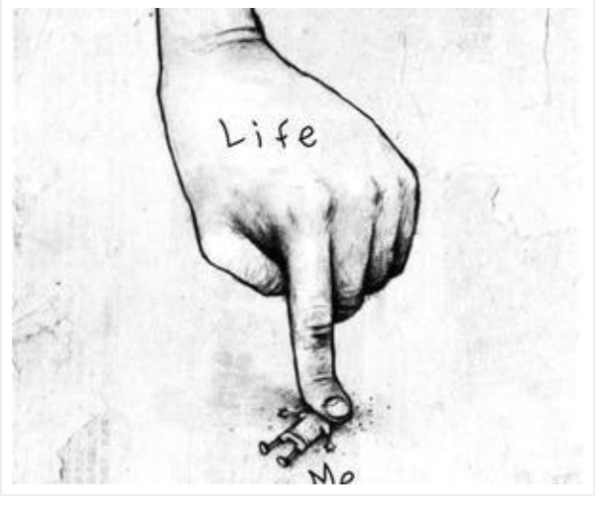
I always thought I was a die-hard positive person and would be very conscious of using positive language in my communication but the past few months have made me realise our biggest motivator for change is PAIN!! Nothing makes one learn faster than the wisdom that comes from braving pain and coming out a victor.

 ” ‪Your deepest pain is your greatest gift if you learn how to use it”

~ Tony Robbins, #1 New York Times best-selling author, life and business strategist, philanthropist, entrepreneur

I went through a lot of personal emotional challenges at a young age. The greatest transformational point in my life was when my mother was diagnosed with cancer. I was in my final year at the university when doctors gave her a life sentence of a few more months to live. In a few months, we saw our mother lose her gruelling battle with cancer and at the young age of 24 when most girls are busy romanticizing the idea of a partner; I found myself being a mother to my five siblings; the youngest being only nine years old at that time. Not only that, the toughest part was acting as a partner to my father who now relied on me for all domestic matters. Personal challenges became even more difficult when my father also passed away within six years of my mother’s death. Now I had a checklist of things to do, get my sisters married and support my brothers so that they could stand on their feet. As a young single woman living in a conservative Pakistani society, I had to forge ahead very much on my own. I was very clear of what Allah had ascribed as my purpose of life. I had to be the nucleus for my siblings and carry out responsibilities that my parents’ early death had left me with. I wed off my sisters and supported my brothers in their academic pursuits.

As if God wanted to further hone my personality, the older one of my brother’s had a major emotional breakdown after my father’s death. At 28 years of age he was diagnosed with chronic schizophrenia. For the following nine years, I was main the carer of an adult mentally ill brother, the bread winner for my family and the ‘maika‘ for my married sisters making sure all cultural expectations of in-laws were appropriately met.

However, these life experiences made me a strong person, mainly because there was no other choice but to be strong. Hence, I feel our pains are actually a source of enrichment depending on how we deal with them.

As a coach, I learnt to help people gain clarity of their biggest pain that they wish to eliminate. By dealing with the core issue we can identify and address the underlying factors that hinder in the path of success. If you wish to tackle the pain in your life and move towards a more fulfilling and stress-free 2018, then contact me to set up time for an informal chat.

pain

How do you view pain in your life? What was your biggest takeaway in 2017?

Wishing you strength and prosperity in the New Year!

Feeling low? Are you asking yourself the right questions?


The most powerful tool used by coaches are the questions they ask. I read an excellent article by Slava Menn recently who shared his experience of a great question used by Tony Robbins that is sure to snap you out of a feeling of hopelessness to discovery. He summarises;

“Your brain is a computer. Submit a question, get a response. Submit negative questions (Q) and get negative responses (R).”

Negative examples:

  • (Q) How’d I get into this mess? (R) I made bad decisions.
  • (Q) Why can’t I get ahead? (R) I’m not smart enough.
  • (Q) Why can’t I get in shape? (R) I’m lazy.

But if you ask your brain empowering questions, you’ll get empowering responses

  • (Q) What did I learn from this mess? (R) To make better decisions.
  • (Q) How do I get ahead? (R) Find a book and a mentor to help me.
  • (Q) How do I get in shape and have fun doing it? (R)Pick up a fun sport as a hobby.

Dig deep to find true answers.

Back to Tony’s question: What’s great about this situation that you’re not seeing right now?

Here are some empowering responses:

  1. This is a wakeup call and I need to address my anger/health issues ..

  2. I need to seek help in …

  3. This is an opportunity to turn my life around…

Life is full of ups and downs, but we have to maintain the energy to stay on track. This energy can be derived from an external source like a friend, a coach or mentor who can help to re-ignite the spark within ourselves.

Setbacks are stumbling blocks that teach us lessons. Every time I fall, I try to ask myself challenging questions that can help me feel empowered.

Examples of powerful questions:

What is it I am doing that is not working?

Are my actions in some way contributing to the situation I am in?

Have I really given this project my 100%?

What can I change?

I stay away from the following question types, as I know they will only make me feel weaker and lost:

Why am I not as successful as my colleague?

Why does this always happen to me?

How long will it take when I get a break?

Its not always easy to break that vicious cycle of struggle, hopelessness, motivation. It takes determination to stay positive. I seek inspiration from my mentors, from self-development books and listening to inspiring people.

There is no such thing as total darkness or hopelessness. There is always something positive in a situation, we are just so engrossed in the negativity of the situation to see any other perspective. So next time you are feeling low, try to ask yourself questions that can help you to dig deep and find answers. Challenge yourself to think outside your comfort zone. Don’t lose sight of that light shining at the end of the tunnel, you will surely succeed. Prepare yourself for success by;

  • Getting your energy (physical, emotional, mental) to 10/10
  • Re-affirming your strengths with regular incantations and affirmations
  • Adopting a healthy life style
  • Teaming up with a buddy or coach who can help to keep you on track

Interested in talking about an issue that is affecting your mood and your life. You want to move ahead but not able to do so? Feel free to contact  shaistakhan@eduservecommunity.org for an informal discussion.


What we know (and the great deal we don’t) about education and disability

UIS Data Blog's avatarData for Sustainable Development

By Silvia Montoya, Director of the UNESCO Institute for Statistics (UIS)

This blog was also published by ONE

New analysis confirms that persons with disabilities are nearly always worse off than those without disabilities when it comes to education 

Persons with disabilities are among the most marginalised groups in any society. Many face daily discrimination in the form of negative or even hostile attitudes and are often excluded from their fundamental human rights by poor policy choices and lack of specialised services and support. For children with disabilities, this exclusion can include the denial of the basic right to a quality education.

This matters because their wellbeing is a key barometer for progress towards the Sustainable Development Goals (SDGs), with their emphasis on equity and on ensuring that nobody is left behind. However, hard evidence on the educational disparities linked to disability has long been…

View original post 1,096 more words

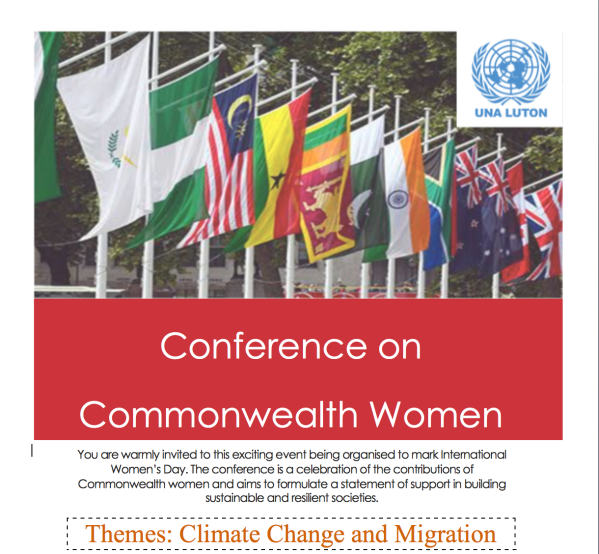
UNA-Luton Conference on Commonwealth women celebrating International Women’s Day

On 26th March 2018, I was privileged to be part of an amazing gathering of civil society organisations and social activists in Luton, Bedfordshire. United Nations Association-Luton under the leadership of the very dedicated and inspiring Dr.Nazia Khanum OBE invited the Luton and Bedfordshire community members and social leaders to add their voice to the agenda for women empowerment to be discussed at the upcoming Commonwealth Heads of Government meeting in London.

The event was organised in partnership with UNA-Harpenden and University of Bedfordshire. Although a weeknight, the attendance numbers surpassed the expectations with almost ninety participants from all walks of life. The event was well attended by dignitaries including the Lord Mayor Cllr G. Ayub and Cllr Naseem Ayub, representatives from the local authority, grass root community organisations, other professionals and academicians.


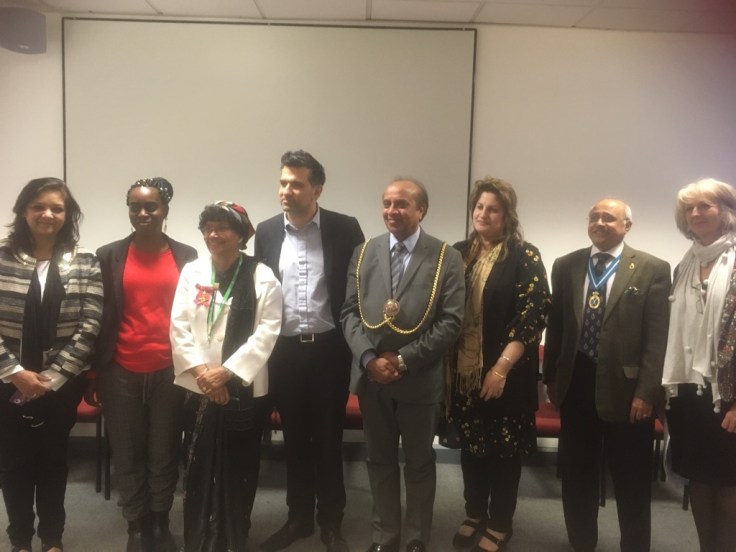
Group photo of organisers with dignitaries
From Left to Right: Shaista Khan, Dr. Violet Cuffy , Dr. Nazia Khanum, Prof.Gurch Randhawa, Mayor Luton Cllr G.Ayub, Cllr Naseem Ayub, Mr. Vinod Tailor, Dr.Diana Pritchard

The audience reflected the cultural diversity and dynamic community of Luton. The biggest success was the significant attendance and active involvement of women from ethnically diverse communities. In the words of Dr.Nazia , Chair UNA-Luton

” This was a tremendously exciting and successful conference, where in my experience it is the first time so many women from traditional backgrounds attended an event based at the University and felt part of women-power.”

The conference addressed the challenges faced by women particularly from the Commonwealth countries in dealing with issues related to Climate change and Migration. The presenters gave some food for thought to the audience by highlighting the impact of the above and encouraging participants to think of ways for addressing these in the group sessions. During the group sessions, participants were invited to share their perspectives and add recommendations to be put forward as a Draft resolution at the Commonwealth Heads of Government meeting next month in London.

Some glimpses of the exciting event can be seen below.

Happy Children’s Day

childrens-day-greeting-creative-650-3_650x400_51510564746

The United Nations established Universal Children’s Day in 1954 in a bid to promote togetherness among children across the world, and improve children’s welfare.

It is celebrated on November 20 to mark the date that the Declaration of the Rights of the Child was adopted by the UN in 1959. This declaration was signed by all the countries of the world.

The theme for 2017 is #KidsTakeOver, with UNICEF inviting kids across the globe to take over grown-up roles such as in the media and politics to voice support for children in need.

To mark the occasion David Beckham is interviewing children for a short film, with fellow sports stars David Villa and Sachin Tendulkar also getting involved in the truly global effort.

Justin Forsyth, UNICEF Deputy Executive Director said: “From Auckland to Amman and from New York to N’Djamena, we want children to campaign in their schools and communities to help save children’s lives, fight for their rights and fulfil their potential.”

Children are a blessing, a joy. They teach us so much with their exuberance and the way they look at life. We have an obligation to keep children safe, to give them the freedom to enjoy their childhoods and to protect them. Children are the most valuable resources for our future.

Let children celebrate this day and make it their own. How about starting with the children in your life. What will you say to them today?……

How do you #TeachSDGs? And, how can you begin?

This blog is being shared from the Teach SDGs website. 

Though “Quality Education” (Goal 4) specifically is set forth to ensure inclusive and equitable education for all, we view each of the 17 goals as being under our umbrella of responsibility within education. For us, as stated in one of our meetings with U.N. Ambassador Dessima Williams, special adviser for implementation of the sustainable development goals, although there are great benefits in acting collaboratively, we are now in a time where we need to shift from concentrating on collaboration to focusing on solidarity. As a cohesive team of global educators, we believe education is the answer.

Click below to read the full article

https://sharemylesson.com/blog/responding-call-action-how-do-you-teachsdgs


UNESCO ASPNET MEMBER SCHOOL, UK PARTICIPATES IN INTERNATIONAL GCED RESEARCH

Hockerill GCED reserach

ASPnet Project Manager Shaista Khan with Ms. Soo Jung Lee & Ms. Meejee Kim from KICE with staff at Hockerill College

We are very excited to share with you the wonderful two days spent at Hockerill College with a team of researchers from the Korean Institute of Curriculum (KICE) and Evaluation. As the National Coordinator for ASPnet in the UK, we were contacted by KICE to help them approach schools in the UK that would be part of their research on Global Citizenship Education (GCED). This research is being conducted in six countries namely Korea, Germany, Singapore, Thailand, United Kingdom & USA. The final paper will be published by end of this year.

It was a pleasure to facilitate this research in the UK and also accompany the researchers Ms. Soo Jung Lee and Ms. MeeJee Kim to Hockerill College in Bishops Stratford on 5th & 6th June 2017. This gave me an opportunity to interact with one of our more active members. We are very thankful to the college staff who took out time for us in spite of their busy schedule amidst student assessments.

Special thanks to Ms. Shamiela Davids who made our visit a very enjoyable and enriching experience. Hockerill College takes great pride in being a UNESCO ASPnet school and ensures that the universal values and ESD themes are integrated across the college’s academic and co-curricular activities.

The team was able to observe lessons and interact with students. Ms. Soo Jung Lee gave a very informative presentation on the Korean Education system and the GCED research. This was well attended by teachers and a very motivated student body who take a keen interest in international development and education systems. They posed several questions about the educational system particularly how students chose institutions of higher studies and the assessment process.

We were able to meet teachers and department heads in charge of the different subject areas. The college’s extensive Languages department and Social & Cultural Anthropology units were of particular interest. Our discussions covered several dimensions from the importance of global minded teacher attitudes to organizing an Indian Curry event as part of a fundraising project by students and efforts made by eco-captains for preventing waste. Overall it was a great experience.

The excitement of the Model United Nations presidents from the student body was heartwarming. They were very excited to meet someone representing UNESCO ASPnet and sought advice on careers in humanitarian and diplomatic fields. The college organizes Model UN days every year and selects presidents who are responsible to carry out certain responsibilities.

As the researchers took notes on GCED practice, I was able to interact with teachers and students and talk to them about the Education 2030 Framework and encouraged them to relate their activities to the Sustainable Development Goals and see how every little action they take has a global impact.

In a lesson with Year 12 students the teacher explored what the students perceived as the main global issues. Responses included environment, artificial intelligence and mental health and wellbeing. One of the students also spoke about the Millenium Development Goals while another questioned why the new framework now has 17 goals as opposed to lesser goals earlier. Sparking this interest and initiating a dialogue will surely result in better student outcomes for the SDGs.

Another literature lesson explored the concept of place and time in poetry and used a piece of poetry to discuss cultural contexts and social inclusion. Students value this approach and one of them commented-

“ Having someone who is global minded makes a difference to me and helps me learn more “ ~ Student Year 11

A personal highlight for me was when I was invited to participate in a lesson that talked about Malala Yousufzai. This was a literature lesson for Year seven and the teacher wanted to give students a broader and positive image of Pakistan and interact with a woman from Pakistani origin who had a different journey than Malala. This also reflected the school’s efforts to provide opportunities for students to look at events and people with an open mind.

It was good to see the motivation of two teachers I met who will soon be leaving for jobs overseas. They were very keen to encourage their new schools in Cairo and Spain to enroll for ASPnet. This is a great testament of how the teachers value this association. One of the teachers who will soon be joining a school in Cairo commented;

 Being a teacher at a UNESCO ASPnet school gives relevance to what we do inside and outside the classroom on a daily basis, providing links with other schools around the world and promoting the discussion of global issues. The Sustainable Development Goals align closely with our mission to allow students to become enquiring, knowledgeable, responsible global citizens as well as providing added support to the work done in Creativity Action Service as part of the IBDP and MYP and in our outreach programme” ~ Hugh Michell, Head of Italian & Teacher of French Theory of Knowledge, Hockerill College

We left the school after discussing ideas for future collaboration and in particular making the ASPnet community more vibrant and interlinked. As part of our engagement strategy we are visiting member schools, looking at ways to collaborate and also working on expanding the network.

“Shaista, it was lovely to meet you! Your enthusiasm gave us the shot in the arm which we needed.” ~ Shamiela Davis, Director of Innovation Hockerill College

For enquiries please contact: unescoaspnet@stevesinnottfoundation.org.uk

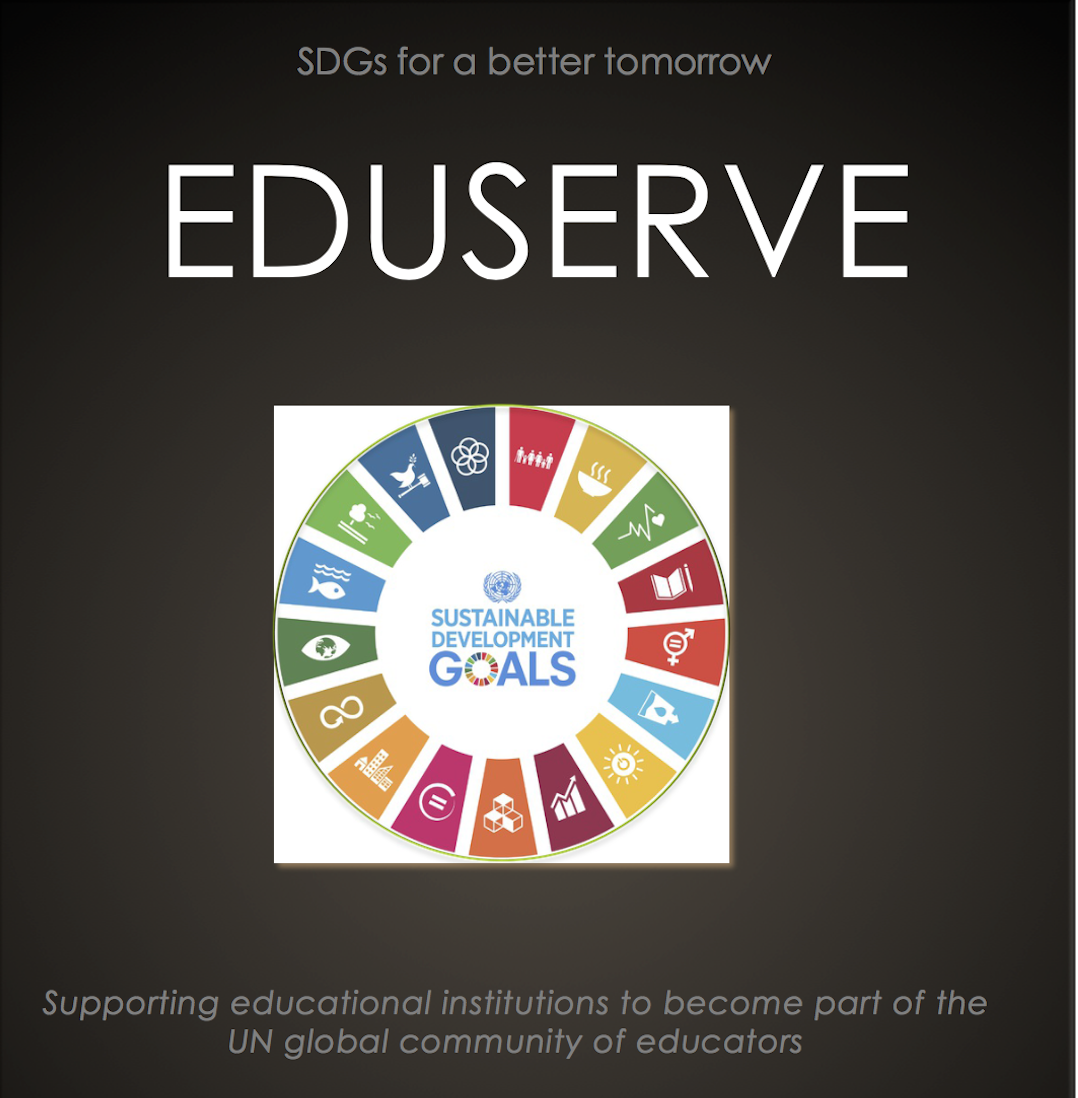
Why EDUSERVE?

As an  educationist and a social activist I have come across several models of development. There is amazing work being done by different agencies on Sustainable development, Social Services, Culture & Diversity Issues and Environment protection. All these great organisations are contributing in their own way to make this world a better place to live in.

cropped-screen-shot-2017-09-02-at-1-56-16-am1.png

The Education 2030 Framework outlines the most important areas for achieving sustainable development.

“The Sustainable Development Goals (SDGs), otherwise known as the Global Goals, are a universal call to action to end poverty, protect the planet and ensure that all people enjoy peace and prosperity.

These 17 Goals build on the successes of the Millennium Development Goals, while including new areas such as climate change, economic inequality, innovation, sustainable consumption, peace and justice, among other priorities. The goals are interconnected – often the key to success on one will involve tackling issues more commonly associated with another.

The SDGs work in the spirit of partnership and pragmatism to make the right choices now to improve life, in a sustainable way, for future generations. They provide clear guidelines and targets for all countries to adopt in accordance with their own priorities and the environmental challenges of the world at large. The SDGs are an inclusive agenda. They tackle the root causes of poverty and unite us together to make a positive change for both people and planet.”

~United Nations Development Program

There is a plethora of resources available to work on the goals. However, organisations specially schools sometimes find it difficult to grasp the content. Hence  EDUSERVE assists schools to make sense of the Education 2030 Framework and creatively use available resources to become part of a global minded community of educators. Individual consultation is provided to find creative ways to address the SDG Goals, motivating teachers and students to see themselves as the solution to the problem. This is done through:

  • Consultation with school heads and community groups
  • Workshops for teachers
  • Guidance in choosing the resources that work for their community
  • Engaging in collaborative projects with other SDG advocates locally and internationally
  • Speaking engagements at events
  • Support in acquiring membership of UN Flagship schools

Ultimately we would like to use this platform to build a community of SDG advocates from all around the work to share, inspire and learn from each other.

We will be showcasing the successful projects of our partner global minded schools. Any contributions are most welcome.

A WordPress.com Website.

Up ↑